
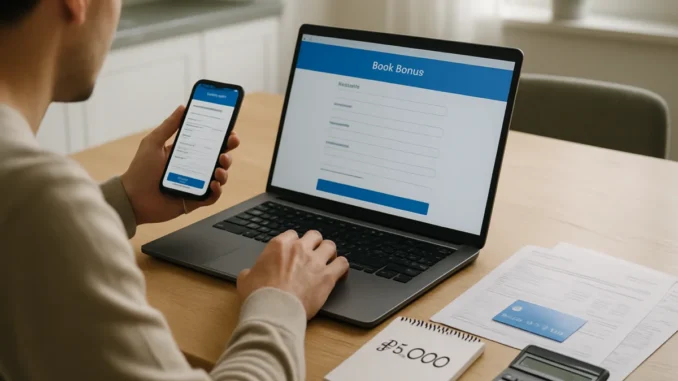
Chase Bank is offering new customers up to $900 in cash for opening a Total Checking account and a Chase Savings account, with the promotion currently showing an expiration of July 15, 2026 and a related page listing July 16, 2026, though the bank says the deal may end earlier. The offer is aimed at people willing to move everyday banking relationships, and Chase is promoting it through its online application and branch network.
Why this offer stands out
Deposit bonuses are a common tool in consumer banking because they help institutions gather low-cost deposits and build long-term account relationships. For customers, these deals can create a quick cash payout, but only if the rules are followed exactly.
Chase’s current promotion is larger than its standard public bonus, according to the offer details. The bank is combining a checking incentive, a savings incentive, and an additional reward for customers who open both accounts at the same time.
How the bonus breaks down
The checking piece pays $300 for new Chase Total Checking customers who open an eligible account, enroll with the right coupon code, and receive a qualifying direct deposit within 90 days. Chase defines qualifying direct deposit as an electronic deposit of a paycheck, pension, or government benefit such as Social Security.
The savings piece pays $200 for new Chase Savings customers who open a new account, deposit at least $15,000 in new money within 30 days, and keep that balance in place for 90 days. The bank says the money must be new to Chase, meaning it cannot come from funds already held by Chase or its affiliates.
Customers who open both accounts together and complete both sets of requirements can receive an extra $400, bringing the total payout to $900. Chase says it deposits the bonus within 15 days after the qualifying conditions are met.
The report also notes that applicants can request an email containing a unique 16-character coupon code, or use the correct online offer link so the code applies automatically. That step matters because bank promotions often hinge on exact enrollment language, and missing the right code can disqualify an otherwise valid application.
What customers need to watch
The checking offer is not available to existing Chase checking customers, fiduciary accounts, or people whose prior Chase checking accounts were closed within the past 90 days or closed with a negative balance. The savings offer is also subject to approval, and the bank requires the account to remain open and unrestricted when the bonus is paid.
Chase Total Checking normally carries a $12 monthly service fee unless customers do at least one of the following each statement period: receive at least $500 in direct deposits, keep a minimum daily balance of $1,500, or maintain an average daily balance of $5,000 across qualifying Chase accounts. Chase Savings has a $5 monthly fee unless customers keep at least $300 in the account, set up a repeating automatic transfer of $25 or more from Chase checking, or qualify through certain linked account exceptions.
For the savings bonus, the math matters. A $15,000 deposit held for 90 days in exchange for $900 works out to roughly a 24% annualized return before taxes, based on the terms in the promotion. The savings account itself pays 0.01% effective APY in the ZIP codes checked by the report, so the value comes from the bonus, not the interest rate.
What the offer means for consumers
For customers who can route payroll or benefits into the new checking account and temporarily park $15,000 in savings, the promotion offers a straightforward way to capture a large cash bonus from a major national bank. Chase’s broad branch footprint may also appeal to people who want in-person service after opening the account online.
The tradeoff is complexity. Applicants need to track direct deposit timing, hold the savings balance long enough to satisfy the 90-day requirement, and make sure both accounts remain open and in good standing when Chase pays the bonus.
There is also a tax angle. Chase says the bonus is considered interest and will be reported on IRS Form 1099-INT, which means the payout can increase taxable income for the year it is received. The report also says there have been no reports of a hard credit check, although every application remains subject to Chase approval.
For now, the key thing to watch is whether Chase keeps the offer at the current elevated level or reduces it before the posted expiration date. Consumers who are considering the deal should pay close attention to the coupon code, the direct deposit deadline, and the savings funding window, because those dates will determine whether the full $900 is paid out.