
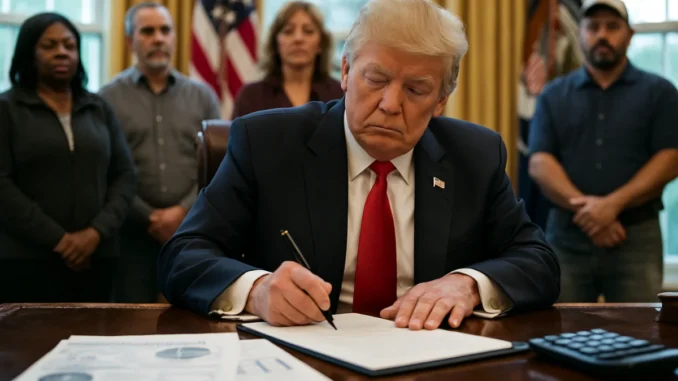
President Donald Trump signed an executive order in Washington this week to expand retirement account access for workers, a move the White House says will be linked to the Saver’s Match, the federal savings incentive created by Congress. The order is aimed at workers who lack an employer plan or face friction opening one, and it signals a push to make retirement saving easier for lower-wage, part-time and small-business employees.
Why the issue matters
Employer-sponsored retirement plans remain the backbone of U.S. retirement saving, but coverage is uneven. The Bureau of Labor Statistics has consistently shown that access is much lower for workers in service jobs, part-time positions and smaller firms than for full-time employees at larger companies.
That gap matters because access often determines whether saving starts early enough to compound. Workers who do not get a 401(k) or similar plan at work are more likely to save sporadically, use taxable accounts or do nothing at all.
What the executive order is designed to do
The White House has not published every operational detail, but the order is expected to direct federal agencies to widen access pathways and coordinate with the Saver’s Match. That could include simplifying plan setup, improving automatic payroll enrollment options or reducing administrative barriers that keep employers from offering a plan.
Under SECURE 2.0, the Saver’s Match is scheduled to replace the Saver’s Credit in 2027. Instead of a credit claimed on a tax return, eligible savers would receive a government match that goes directly into a retirement account, a structure policymakers hope will be easier for households to understand and use.
Where the limits are
The order can steer agencies, but it cannot by itself rewrite retirement law. Major changes to tax treatment, eligibility or employer obligations still require Congress, which means the practical impact will depend on rulemaking, guidance and whether lawmakers back the effort.
That is why the announcement is as much about execution as policy. If agencies move slowly, the order could become another federal directive with limited effect. If they move quickly, it could reshape how small businesses offer plans and how workers enroll.
What the data suggest
Research from recordkeepers and plan sponsors has repeatedly shown that automatic enrollment and default contribution rates raise participation far more than voluntary sign-up systems. Vanguard’s annual report on retirement plans has found that plans using auto-enrollment consistently post higher participation than plans that rely on employees to opt in.
Policy analysts at the Center for Retirement Research at Boston College have warned that participation alone is not enough. Many households still save too little to replace earnings in retirement, especially when they start late, contribute modest amounts or interrupt saving during financial stress.
What employers and workers will watch
For workers, the key question is whether the order produces easier access, lower fees and a clearer path to federal matching dollars. For employers, the issue is whether Washington can make retirement plans less burdensome without shifting new compliance costs onto small payrolls.
Small business groups have long said cost and paperwork are the biggest obstacles to offering plans, a point echoed in surveys from the National Federation of Independent Business. If the administration can streamline those tasks, more firms may decide the benefit is worth it.
What to watch next
The next test is implementation. Watch for Treasury, Labor and IRS guidance, because those agencies will determine how the Saver’s Match fits into the new framework and how quickly employers can respond.
Also watch whether the order triggers a broader debate in Congress about retirement coverage, tax incentives and automatic enrollment. If it does, the question will shift from whether access expands on paper to whether more workers actually build balances that can support them later.