
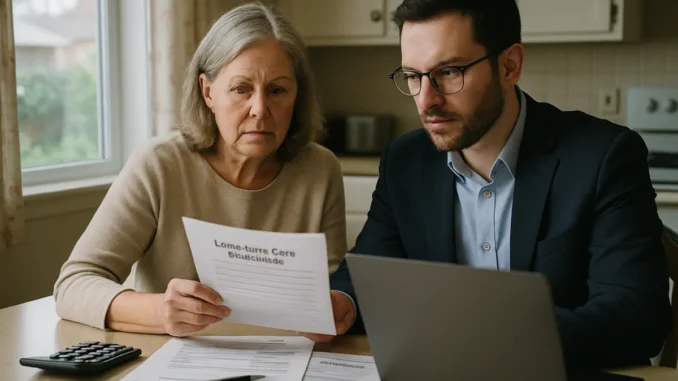
Women in the United States face a long-term care risk that is larger than most retirement plans account for. They live longer than men, are more likely to spend years alone, and often have less income to absorb the cost of help at home, assisted living, or nursing home care. That makes long-term care planning an urgent issue for older women now, not a problem to put off.
Longer lives mean more exposure to care needs
Long-term care covers help with daily activities such as bathing, dressing, eating, moving around, and managing medications. It is different from short-term medical treatment, and that distinction matters because Medicare usually does not pay for ongoing custodial care, according to Medicare.gov.
The reason women face this issue more often is simple: they tend to live longer. The U.S. Department of Health and Human Services says about 70% of people turning 65 will need some form of long-term services and supports during their lives, and women make up a disproportionate share of that group because they survive into the oldest age brackets more often than men.
The cost gap is wide
Long-term care can quickly become expensive. Genworth’s 2024 Cost of Care Survey found that the median annual cost of a private room in a nursing home exceeded $100,000, while in-home help and assisted living also carried steep price tags.
That spending hits women harder because many enter retirement with smaller savings. Career interruptions, lower lifetime earnings, and longer life spans can leave less money available just when care needs start rising. The result is a basic mismatch: the people most likely to need care are often the least prepared to pay for it.
Insurance helps, but timing matters
Long-term care insurance can reduce the burden, but it is not a simple fix. Premiums usually rise with age and health risks, and many people are denied coverage or face higher prices once they wait too long to apply. That makes early planning important for women in their 50s and early 60s, when options are typically broader.
Some buyers now look at hybrid policies that combine life insurance with long-term care benefits. These products can appeal to people who want something tangible even if they never need care, but they also require larger upfront commitments. Financial advisers often say the right choice depends on assets, family support, and whether a person wants to self-insure.
Family care still fills the gap
When formal coverage is missing, families step in. Women are more likely than men to be both care recipients and unpaid caregivers over the course of their lives, which can create a cycle of financial strain and lost earnings. That matters because unpaid care often delays retirement savings, reduces job flexibility, and increases stress on adult children.
The Kaiser Family Foundation has reported that Medicaid pays for most long-term services and supports in the U.S., which shows how often private savings fall short. But Medicaid is designed as a safety net, not a first-choice retirement strategy. It also comes with income and asset rules that can force families to spend down resources before qualifying.
What readers should watch next
For women approaching retirement, the practical questions are direct: Who would provide care, where would that care happen, and how would it be paid for? Answering those questions early can help avoid rushed decisions after a health crisis.
For the industry, the trend points toward more demand for home-based care, more interest in hybrid insurance products, and more pressure on employers and policymakers to address the care gap. What to watch next is whether more women buy coverage earlier, whether insurers widen product choices, and whether public programs adapt to a population that is living longer and needing more care at the same time.