
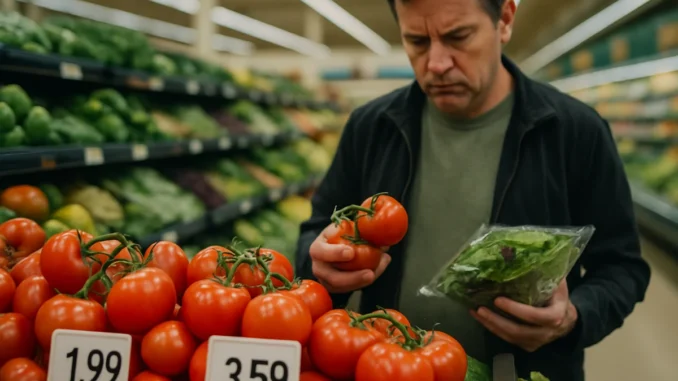
Tomato prices have climbed sharply in U.S. grocery stores over the past several months, pushing up the cost of BLTs, salads, salsa and many restaurant meals as tariffs on imported produce, tighter global supply and the war in Ukraine drive higher costs across the food chain, economists and market analysts said. The increase matters now because tomatoes are a staple ingredient, imported heavily during much of the year, and price swings show up quickly in checkout totals from supermarkets to diners.
Why tomatoes are suddenly more expensive
Tomatoes are one of the most price-sensitive fresh foods in the U.S. market. Domestic farms in Florida and California cover part of the year, but imports from Mexico fill a large share of demand when U.S. output is low, according to USDA trade data.
That dependence makes prices vulnerable when trade rules change. Duties on imported tomatoes, or even the threat of them, can raise landed costs for wholesalers, who then pass part of the increase to retailers and food-service buyers.
The issue is not new. U.S. growers have for years accused Mexican exporters of dumping tomatoes into the American market at unfair prices, and the Commerce Department has repeatedly faced pressure to use antidumping measures or renegotiate suspension agreements. Those disputes create uncertainty for buyers, and uncertainty alone can push wholesale quotes higher.
Trade policy is only part of the story
Economists say tariffs work like a tax on imports, and produce is rarely spared because retailers operate on thin margins. If a border charge rises, buyers either pay more or switch to a different supplier, which can still cost more if supply is tight.
Even a modest tariff can matter in a market like tomatoes. Fresh produce is bulky, low-margin and sold in high volume, so a small added cost at the border can erase a shipment’s profitability and force importers to reduce orders or accept lower-grade fruit.
The war in Ukraine added another layer of pressure. The conflict pushed up energy, fertilizer and transport prices worldwide, according to World Bank commodity reports, and those costs flow into greenhouse production, trucking and cold storage. Fresh tomatoes are especially exposed because they must move quickly and cannot sit in inventory for long.
Weather has also complicated the market. Heat, heavy rain and crop disease can cut yields in key growing regions, while labor shortages and higher fuel bills make harvesting and shipping more expensive. That combination leaves less room for prices to fall even when demand softens.
What the data and experts are saying
The U.S. Bureau of Labor Statistics tracks tomato prices in its Consumer Price Index, and the latest readings show tomatoes rising faster than the broader food-at-home category. The agency’s data do not isolate every cause, but they do show how quickly fresh produce can react to supply shocks.
USDA market reports also indicate that wholesale tomato prices move sharply when import flows tighten. Analysts at the agency and in the private sector say the market lacks the cushion that packaged foods have, because growers cannot quickly expand output and retailers cannot store fresh tomatoes for long.
Trade economists at the Peterson Institute for International Economics and other research groups have long argued that import duties are usually passed through to consumers when firms cannot absorb the added cost. In produce, where demand stays steady and margins are thin, the pass-through can be especially visible.
World Bank research has also shown that the war in Ukraine pushed up global fertilizer and energy prices, and those inputs feed directly into agriculture. Even after some commodity prices eased from their 2022 peaks, many growers and distributors still face higher baseline costs than they did before the conflict.
How consumers and restaurants are responding
For households, the effect is visible in a narrow but frequent way. A few extra cents per pound at the produce aisle can turn into a noticeable change for families that buy tomatoes every week, especially during winter and spring when imports dominate supply.
Restaurants face a harder calculation. Tomato-heavy dishes, from BLTs to burgers, salads and pizza toppings, have little room for error because customers notice price increases quickly. Operators often respond by shrinking portions, substituting less expensive varieties or raising menu prices across several items rather than on one dish.
Grocers also adjust. Chains may switch sourcing between regions, promote alternative produce or lean on canned and processed tomatoes, which have different supply dynamics and often move less sharply than fresh fruit. Those substitutions help, but they do not fully shield shoppers from higher costs when fresh tomatoes are moving fast and wholesalers are paying more.
What this means next
Tomato prices are unlikely to ease until at least one pressure point improves, whether that means lower trade costs, stronger harvests in Mexico or the U.S., or cooler input prices for fuel and fertilizer. If tariffs remain in place or global shipping and farm costs rise again, shoppers could keep paying more for fresh tomatoes well into the next buying season.
For now, the market is a reminder that a low-cost staple can become a fast-moving inflation problem when trade policy and global conflict collide. The next signals to watch are USDA import volumes, BLS grocery price data and any changes to duties on tomato shipments from Mexico.