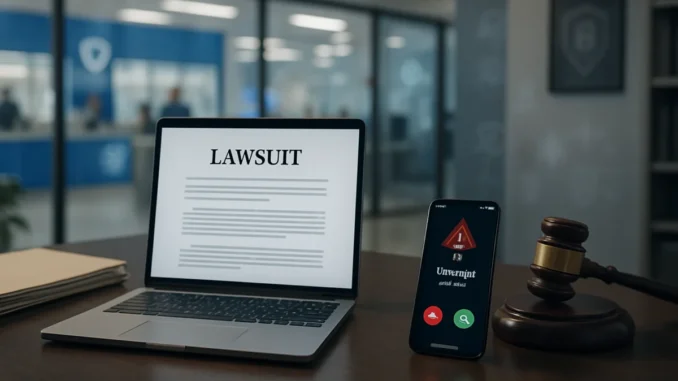
Capital One has filed a federal lawsuit against unknown defendants it says ran a scam campaign by placing automated or prerecorded calls that impersonated the bank, according to the complaint. The case, filed in the U.S. District Court for the Eastern District of Virginia, seeks to stop the alleged misuse of Capital One’s name and trademarks, disrupt the calling operation, and hold the operators liable for trademark infringement, all as banks face continuing pressure to protect customers from impersonation fraud.
What Capital One Says Happened
The bank alleges that callers used Capital One’s branding to make the messages sound official and convincing. According to the complaint, the calls were designed to mislead recipients into believing they were hearing from the bank, when in fact the communications came from unidentified operators with no authorization from Capital One.
That approach matters because caller identity is central to consumer trust. If a scammer can borrow a major bank’s name, logo, or reputation, the call can bypass the skepticism that would normally greet a random number.
Capital One is asking a court to treat the conduct as more than a basic fraud case. By framing the dispute as trademark infringement, the bank is arguing that the misuse of its brand itself caused harm, regardless of whether each call led to a confirmed financial loss.
Why Trademark Law Matters Here
Trademark law is often associated with logos and product names, but it also protects consumers from confusion. If a scam operator uses a bank’s identity to create the false impression of affiliation, the law gives the brand a path to seek injunctive relief and damages.
That legal strategy has become more common as scam campaigns grow more sophisticated. Callers no longer rely only on generic fraud scripts. They increasingly mimic legitimate institutions, using recorded prompts, spoofed caller IDs, and urgent language to pressure people into sharing account details or making payments.
The lawsuit underscores how banks are trying to use civil litigation to combat what is usually a moving, hard-to-trace operation. Unknown defendants can be difficult to identify, especially when calls are routed through layered telecom systems and offshore infrastructure.
Background: Impersonation Fraud Keeps Rising
Impersonation scams remain a major consumer threat. The Federal Trade Commission reported that consumers lost more than $10 billion to fraud in 2023, a record level that included widespread phone-based scams and other forms of digital deception, according to the agency’s Consumer Sentinel Network data.
Financial institutions have become frequent targets because their names carry authority. When a caller claims to represent a bank, victims may respond faster than they would to a typical sales pitch or robocall. That gives scammers a direct path to passwords, one-time codes, or payment instructions.
Regulators have also pressed telecom carriers and platform providers to do more to block illegal robocalls. But the volume of unwanted calls remains high, and enforcement often moves more slowly than scam operations can adapt.
What the Lawsuit Could Change
For Capital One, the lawsuit is a defensive move intended to limit brand damage and warn consumers that any call using its name may not be legitimate. It may also help the bank preserve evidence and establish a legal record that supports future enforcement actions against similar schemes.
For the broader banking sector, the case shows how brand protection is becoming part of fraud prevention. Banks now need not only cybersecurity teams and customer-service protocols, but also legal strategies aimed at stopping impersonation before it spreads.
The complaint may also influence how companies respond to scam calls that exploit their trademarks. If courts are willing to grant fast relief, plaintiffs may be able to disrupt fraudulent call centers sooner, even when the operators remain unnamed at the start of the case.
What Consumers Should Watch
The practical message for consumers is simple. A caller claiming to be from a bank should not be trusted just because the name sounds familiar. Customers should hang up, verify the number through the institution’s official website or app, and avoid sharing credentials, one-time passcodes, or account recovery information over the phone.
That caution matters because the line between customer service and fraud is getting harder to see. As banks and regulators push back, scammers will likely keep changing scripts, caller ID tactics, and delivery methods to stay ahead of detection.
What to watch next is whether Capital One’s case identifies the operators behind the calls, and whether the court is willing to move quickly enough to cut off the alleged campaign before the next wave of impersonation reaches consumers.