
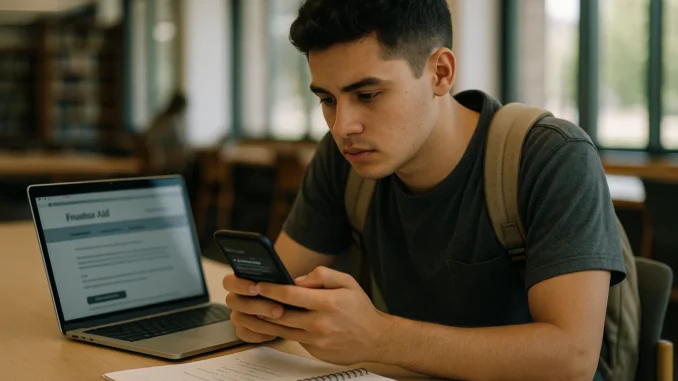
Gen Z college students are increasingly using TikTok to look for scholarships as they prepare for upcoming application cycles, but consumer advocates say the app is not the safest or most reliable place to find aid. The appeal is obvious: short videos can surface tips fast, while tuition costs keep rising and students want quick answers on deadlines, eligibility, and essay rules. Experts say the better approach is to use TikTok as a starting point, then verify every offer through schools, federal aid sites, and trusted scholarship databases.
Why the search has moved to social media
The shift reflects how younger students already consume information. TikTok rewards brief explanations, personal stories, and algorithmic discovery, which makes scholarship hunting feel less bureaucratic than digging through school websites or long database filters. For students balancing classes, work, and financial pressure, a 30-second video can seem easier to absorb than a dense aid page.
That convenience matters because the stakes are high. College Board said average published tuition and fees at public four-year in-state colleges rose to $11,610 for the 2024-25 academic year, before housing and meals. Even when grants and institutional aid reduce that number, many students still need outside scholarships to close the gap.
What can go wrong when a video becomes a guide
The problem is that scholarship rules are often narrow and easy to oversimplify. A creator may highlight a large award, but leave out that it only applies to students from one state, one major, one background, or one income bracket. A viewer who copies the advice without checking the source can waste time on ineligible applications, or worse, hand over personal information to a fake offer.
The Federal Trade Commission warns that legitimate scholarships do not require an application fee and do not guarantee selection. It also advises students to be skeptical of claims that sound too good to be true, such as promises of guaranteed funding or secret access to aid. In practice, those are the kinds of red flags that social feeds can normalize, because the format rewards speed and attention more than verification.
Consumer advocates also note that social media can blur the line between useful advice and promotion. Some creators are trying to help students find money for school, but others may be steering traffic to affiliate links, sponsored products, or services that have no relationship to the scholarships they mention. On TikTok, the presentation can look equally polished whether the information is accurate or not.
Where students are more likely to find trustworthy matches
Financial aid experts point students toward sources that show who runs the database and how it is maintained. That includes the U.S. Department of Education’s Federal Student Aid resources, school financial aid offices, state higher education agencies, local foundations, employers, religious groups, and community organizations. These sources are slower than social media, but they are more transparent about deadlines, eligibility requirements, and renewal rules.
School counselors say local scholarships are often overlooked because they are not flashy enough to trend online. A small award from a hometown rotary club, a credit union, or a regional nonprofit may have fewer applicants than a national contest with a viral video attached. That can make the local option more valuable, even if it looks less impressive on a feed.
Search platforms such as College Board Scholarship Search and Fastweb can also help students filter by major, location, identity, or activity background. The key difference is that these tools are built for searching, not entertaining. Students still need to read the fine print, but at least the structure encourages comparison rather than impulse.
What experts say students should do next
Advisers recommend a simple workflow. Use TikTok to learn that a scholarship category exists, then move immediately to an official or established source to confirm the details. Check whether the sponsor has a real website, a physical address, and a clear privacy policy. If the application asks for a fee, bank account information, or a Social Security number too early, stop and verify the listing before proceeding.
The broader issue is access. Many students, especially first-generation and low-income applicants, are trying to piece together college financing without family experience to guide them. Social platforms fill that gap because they feel familiar and fast. But familiarity is not the same as reliability, and a search tool built for engagement can easily miss the quieter scholarships that actually fit a student’s profile.
What to watch next is whether colleges, state agencies, and federal aid offices make scholarship searches easier to find in the places students already use. If those institutions improve search tools and publish clearer, shorter guidance, social media may become a useful gateway instead of a risky endpoint. Until then, the smartest move is to treat TikTok as a lead generator, not the final word on where scholarship money is hiding.