
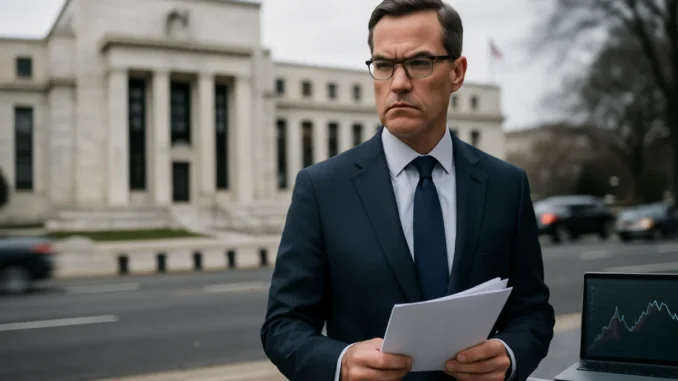
Kevin Warsh, the former Federal Reserve governor and Donald Trump’s pick for a possible Fed leadership role, is signaling a more disciplined approach to interest rates at a moment when consumers are still facing costly mortgages, auto loans, and credit card debt. The stakes are immediate in Washington and across the country because the Fed’s benchmark rate influences borrowing and savings costs, and a change in leadership could alter how quickly relief reaches households.
Why the Fed chair matters
The Fed does not set mortgage or card rates directly. It sets the federal funds rate, then banks, bond markets, and lenders translate that policy into the prices consumers pay for credit and the yields they earn on deposits.
That is why the chair is more than a ceremonial figure. The chair has only one vote on the 12-member Federal Open Market Committee, but the job carries outsized influence over communication, consensus building, and how fast the central bank moves when inflation or growth changes.
Warsh served on the Fed board from 2006 to 2011 and has long been associated with a hawkish view of monetary policy, one that keeps price stability at the center of decision making. In public remarks over the years, he has argued that the Fed should avoid staying easy for too long and should be cautious about using monetary policy to solve broader economic or fiscal problems.
What a Warsh-led Fed could signal
The market question is not whether one person can dictate the policy path. It is whether a new chair can shift the tone of the committee and the pace of rate cuts or rate increases.
A hawkish chair can pull expectations toward higher-for-longer rates. That matters because financial markets price the future, not just the current policy setting. Two-year Treasury yields often move first, and mortgage lenders, auto financiers, and corporate borrowers quickly adjust to the new price of money.
That transmission can begin long before the Fed votes. The CME FedWatch tool, which tracks futures-based rate expectations, often shifts within minutes of speeches from central bankers. That reaction shows how much a chair’s language can matter even before any official policy move.
What consumers would feel first
Households carrying revolving debt would likely feel the most direct effect. The Federal Reserve has reported that credit card balances remain above $1 trillion, and card APRs have stayed above 20% in recent readings, leaving many borrowers exposed to high interest costs even before a new policy decision is made.
Homebuyers would feel it more indirectly but still sharply. Thirty-year fixed mortgage rates follow the 10-year Treasury yield more closely than the overnight policy rate, but a chair who reinforces a tougher inflation stance can keep bond yields elevated and make refinancing less attractive.
Car buyers, small businesses, and homeowners with home equity lines would see faster changes. Those products usually reprice with the prime rate or with lender funding costs, so a shift in the Fed’s posture can show up in monthly payments within weeks.
Savers would gain something, but not a full windfall. Banks typically raise deposit rates more slowly than they raise loan rates, which means higher policy rates do not always pass through cleanly to savings accounts. Even in a higher-rate environment, many households earn less on cash than borrowers pay to finance debt.
Data points that explain the risk
The Consumer Financial Protection Bureau has said a large share of American households carry some form of revolving debt, a sign that borrowing costs still matter for day-to-day budgets. The New York Fed’s household debt reports also show that credit card and auto loan balances remain large enough to keep consumers sensitive to any prolonged period of tight policy.
That sensitivity is why leadership matters even when the Fed’s mandate does not change. If markets believe the next chair will defend inflation more aggressively, long-term rates can stay higher even if economic growth softens. If markets believe the Fed will move quickly to cushion labor market weakness, bond yields can fall before the first policy cut arrives.
Economists often note that the chair’s real power comes from framing the debate. The policy path still depends on inflation data, employment reports, and committee votes, but the chair can shape the discussion around which risk matters more at any given moment.
What to watch next
The next clues will come from Warsh’s public comments, any formal nomination process, and the Fed’s language on inflation and labor market risks. Watch for whether he emphasizes price stability first, or whether he signals more willingness to ease if growth slows.
For readers, the practical implication is straightforward. A Warsh-led Fed could delay cheaper borrowing if it keeps a tight grip on inflation, while savers may see deposit yields stay elevated for longer. The key question now is whether markets start pricing that path before the Fed makes any official move.