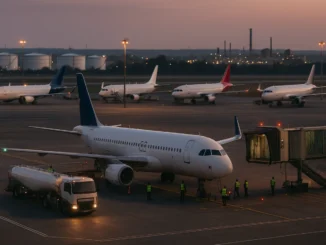
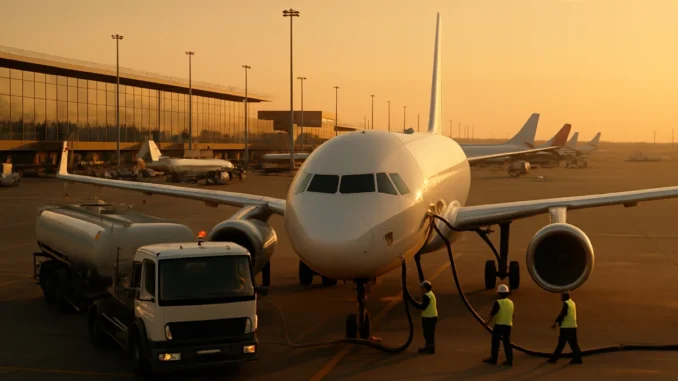
Europe could enter the peak summer travel season with a tighter jet fuel market than airlines planned for, raising the risk that some carriers trim schedules or cancel flights in the coming weeks. Traders and analysts say the pressure is building as refinery maintenance, delayed shipments and strong seasonal demand converge, a combination that could push prices higher and squeeze airline operations before July and August, when airports are already crowded.
Context
Jet fuel is a refined product that sits in the middle of a complex chain, from crude oil supply to refinery output to port logistics and airport storage. Europe consumes more aviation fuel than it produces, which makes it vulnerable when imports slow or refineries shift output toward other products such as diesel.
That dependence matters most when demand spikes. Summer travel in Europe usually drives a surge in flights, and carriers often hedge fuel costs months in advance. But if physical supply tightens at regional hubs, hedges do not solve the problem of finding enough barrels to load aircraft on time.
Why the shortage risk is rising
Several factors are converging, according to market participants and energy analysts. Refinery outages or maintenance reduce jet fuel output, while shipping disruptions can delay cargoes moving into Europe from the Middle East, India or the United States. At the same time, a strong tourism season can lift consumption faster than inventories rebuild.
The International Energy Agency has repeatedly warned that Europe’s refining system is under strain from age, maintenance cycles and shifting product demand. In practice, that leaves less buffer when an unplanned outage hits a plant that makes jet fuel for the region.
Airlines also face a timing problem. Aircraft schedules are locked in well before the travel rush, so any supply gap can quickly become an operations issue rather than just a pricing issue. If fuel is not available at a specific airport or on a specific route, carriers may have to tank more fuel elsewhere, alter flight plans or cancel lower-margin flights.
How airlines could respond
The first line of defense is usually cost, not cancellation. Carriers may pass higher fuel bills into fares, especially on routes with limited competition. But when supply is constrained at key airports, airlines have fewer options.
Industry observers say the most likely response would be selective cuts, not widespread grounding. Short-haul leisure routes with thin margins are often easiest to trim, while peak business routes and long-haul services usually get priority.
That would still hit travelers. A carrier that cancels a smaller number of flights in July can trigger missed connections, rebookings and fare spikes across the network. The effect is often concentrated at already busy hubs such as London, Paris, Amsterdam, Frankfurt and Madrid.
What the data suggests
Fuel remains one of the biggest cost lines for airlines. The International Air Transport Association has said fuel is typically among the two largest operating expenses for carriers, alongside labor. When prices jump quickly, airlines have limited ability to absorb the shock for long.
Historical patterns also matter. During previous supply squeezes, airlines were forced to pay premiums for prompt delivery because physical barrels at airport terminals became scarce even when broader oil markets were calm. That is why a jet fuel shortage can emerge even without a full-blown crude oil crisis.
Eurocontrol, which monitors air traffic across Europe, has reported that traffic is near or above pre-pandemic levels in many corridors, adding more pressure to fuel demand at a time when airports are already managing congestion and staffing challenges.
Implications for travelers and the industry
For travelers, the immediate risk is not a continentwide fuel blackout. It is a narrower but still disruptive pattern of canceled flights, reduced frequency and higher fares on routes that depend on tight aircraft rotations. Vacation travelers are often the first to feel it because they book during the same peak window when supply is tightest.
For airlines, the episode underscores how exposed the industry remains to fuel logistics. Even with more efficient fleets and broader hedging, carriers still depend on a refinery and import system that can tighten fast. The more concentrated summer demand becomes, the less room there is for error.
Watch for refinery maintenance updates, port disruptions and airline schedule changes in the next several weeks. If inventories do not improve before the summer peak, the market could shift from a pricing problem to a capacity problem, and that is when travelers are most likely to see cancellations and fuller planes.