
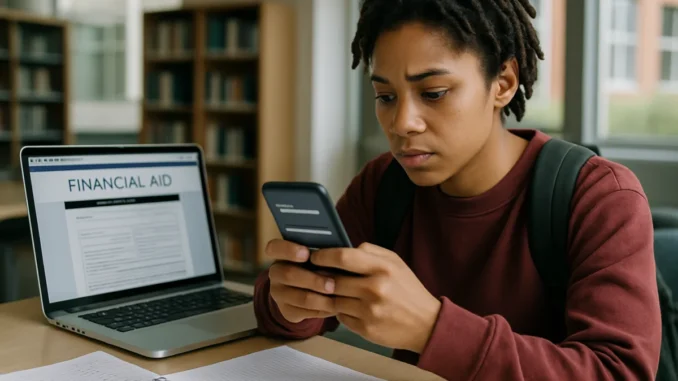
As college application and financial-aid season picks up this spring, Gen Z students are turning to TikTok for scholarship tips, but consumer advocates say the app is a poor place to verify funding because posts can mix real opportunities with outdated deadlines, affiliate links and outright scams, leaving students in the U.S. at risk of wasting time or sharing personal information with bad actors.
Why TikTok Became a Scholarship Search Tool
Short-form video has changed how many young people search for information. Scholarship advice now arrives in 30-second clips, often packaged as personal success stories, quick lists or calls to action that feel easier to absorb than dense financial-aid websites.
That convenience explains the trend. College funding is confusing, deadlines move fast and students are under pressure to find money before enrollment decisions are due. TikTok gives them instant access to creators who promise fast answers, but the platform is built to maximize attention, not verify accuracy.
The problem is structural. A post can rack up views because it is entertaining or alarming, not because it is correct. In scholarship search, that matters because a misleading deadline, a fake award or an incomplete application detail can cost a student real money.
What Experts Say Students Should Check First
Consumer protection agencies and financial-aid professionals consistently point students to official sources before social media. Federal Student Aid, the U.S. Department of Education’s aid office, says students should begin with the FAFSA and their college’s financial-aid office, which can identify school-specific grants, work-study options and deadlines that TikTok creators may not know.
The National Association of Student Financial Aid Administrators has long advised students to use institutional aid offices as a primary resource because colleges can explain which awards require separate applications and which ones are automatic. State higher-education agencies also post grant and scholarship opportunities that are tied to residency, GPA or program of study.
Established search tools can also help. The College Board’s Scholarship Search, state portals and local community foundation databases are built to sort awards by criteria such as major, hometown, heritage or career path. Unlike social media clips, these databases are designed to be updated and searchable.
How Scholarship Scams Spread on Social Platforms
The Federal Trade Commission warns that scholarship scams often follow a familiar pattern: a promise of free money, pressure to act quickly and a request for a fee, a purchase or sensitive personal information. Legitimate scholarships do not require students to pay to apply or to collect winnings.
Scammers can exploit TikTok’s format in several ways. They may post lookalike accounts that imitate real scholarship organizations, direct users to forms that harvest names and birthdates, or push applicants to message them privately before sharing links that lead to phishing pages. Some posts also recycle expired offers, which can send students down dead ends at a critical time in the academic calendar.
Cybersecurity experts say the risk grows when students leave the app and enter personal information without checking the source. A scholarship form that asks for a Social Security number, bank account details or payment for processing should trigger immediate skepticism. The Better Business Bureau has repeatedly listed these as common red flags in education-related fraud.
Why Social Search Feels Easier, and Why It Is Riskier
TikTok works because it lowers the barrier to entry. Students can search by phrase, watch a few clips and feel as if they have made progress without building a spreadsheet or reading a long eligibility page. For many first-generation and under-resourced students, that speed is appealing.
But speed can distort judgment. Scholarship opportunities are often highly specific, and the details matter. A student may see an award aimed at a nursing major in Texas, a first-generation applicant in California or a member of a local civic group, then assume it applies broadly. If the original post leaves out the restrictions, the student can waste time or miss a better match elsewhere.
That is why experts draw a line between discovery and verification. Social media can surface possibilities. It cannot confirm whether a scholarship exists, whether it is still open or whether the application asks for information that should never be shared outside a trusted portal.
What Students Should Do Instead
The safer approach is to use TikTok as a starting point, not a final source. Students can save promising scholarship names, then check each one against the sponsor’s official website, a school financial-aid office or a state agency page. If a creator does not name the sponsor clearly, the opportunity should be treated with caution.
Students should also compare any deadline, award amount and eligibility rule across at least two trusted sources. If the scholarship requires an application fee, promises guaranteed money or asks for payment to unlock the award, it is a warning sign. If the organization cannot be found outside the platform, that is another.
High school counselors, college advising centers, employers, community organizations and professional associations remain strong sources of scholarships that never trend on social media. Those channels may be less flashy, but they are more likely to provide direct contact information, documentation requirements and current instructions.
What This Means for Students and the Industry
The shift toward social search shows how colleges and public agencies now compete with creators for student attention. If financial-aid information is buried in long pages, students will keep looking for faster explanations on TikTok and elsewhere. That does not make social media the right source. It means official institutions need clearer mobile design, shorter explanations and better navigation.
For readers, the immediate takeaway is straightforward: use TikTok to identify ideas, then verify every detail somewhere accountable. The next thing to watch is whether schools, state agencies and federal offices respond by posting more concise, student-friendly content where young people already spend their time, while regulators keep pressure on platforms and scammers that profit from confusion.